Our approach is built on a simple idea: people learn by doing. Through carefully designed exercises, your team practices the skills they actually need.
The foundation of every interaction. We train your team to notice what's actually happening — body language, tone, group dynamics — instead of defaulting to assumptions. Better observation means better decisions.
Building on what others offer instead of competing with it. "Yes, And" isn't just a catchphrase — it's a discipline. We practice building on ideas constructively, creating psychological safety, and finding common ground.
Acting with confidence when certainty is impossible. We build your team's capacity to make decisions, adapt on the fly, and support each other under pressure — not by rehearsing scripts, but by building genuine adaptability.
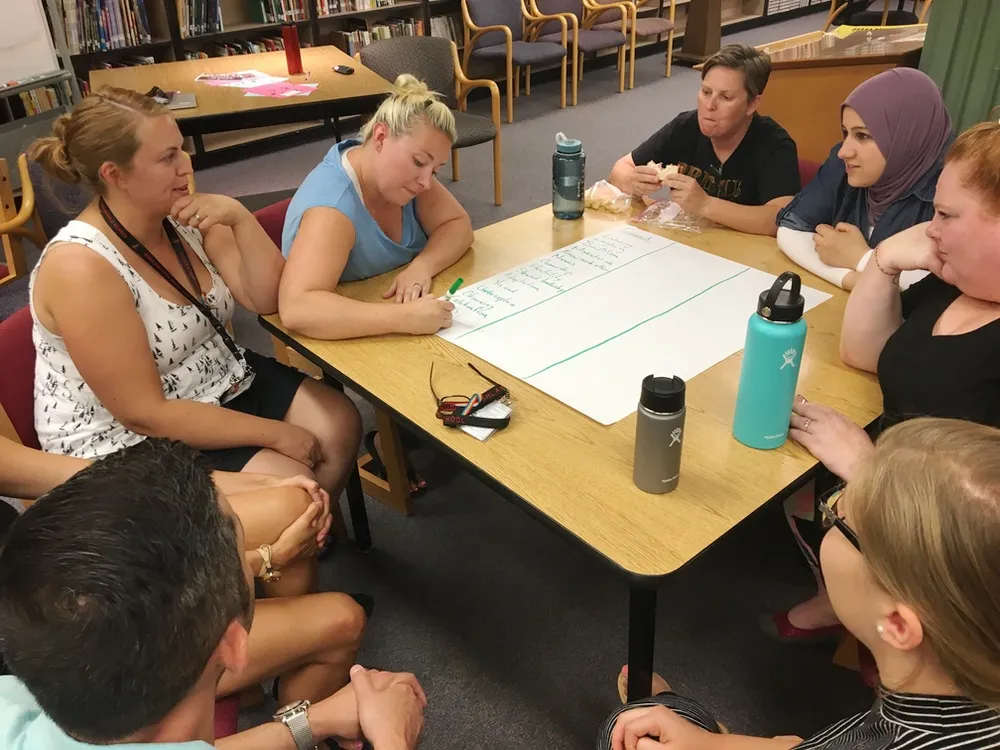
When people hear 'improv,' they picture comedy clubs and awkward audience participation. What we do is fundamentally different. Our exercises are designed to feel like collaborative problem-solving — because that's exactly what they are. No scripts. No performing. No spotlight. Just real practice for real work situations.
Each skill is practiced in context, not lectured about. Your team leaves with tools they use Monday morning.
Hear what's actually being said, not just waiting for your turn to talk. Better listening means fewer misunderstandings and faster alignment.
Respond to change with composure instead of resistance. Build comfort with ambiguity and confidence in uncertain situations.
Create psychological safety through consistent, supportive interactions. Trust is built in small moments, and we practice those moments.
Break habitual thinking patterns. 'Yes, And' opens possibilities that 'Yes, But' shuts down. Innovation starts with acceptance.
Stay present and effective when things don't go as planned. Composure is a skill, and it can be practiced.
Make your colleagues look good. When everyone's focused on supporting each other, the whole team performs better.
Research from institutions like Harvard, Stanford, and MIT confirms what our clients experience: experiential learning builds stronger neural pathways than passive instruction. Applied improv specifically has been shown to improve creative thinking, reduce anxiety in communication, and increase team psychological safety.
Download the Research Guide
Download our free guide exploring the research behind why experiential learning transforms team performance.
Free PDF delivered to your inbox. No spam, ever.
Book a free 15-minute discovery call. We'll answer your questions and help you decide if this approach is right for your team.
Book a Discovery Call